




Natural vs Synthetic Fragrance Ingredients: What the Difference Actually Means for Scent, Skin, and Longevity
Walk into any conversation about perfume and you will eventually hit the natural versus synthetic debate. The instinct most people bring to it is straightforward: natural ingredients are better, purer, safer, and more luxurious; synthetic ones are cheap substitutes used to cut costs. This instinct is almost entirely wrong, and it leads to a significant number of poor buying decisions. Understanding what natural and synthetic fragrance ingredients actually are, how they behave on skin, and what role each plays in a well-crafted perfume gives you a far more accurate picture of what you are actually wearing and why some fragrances perform so much better than others.
What Natural and Synthetic Fragrance Ingredients Actually Are

Natural fragrance ingredients are materials extracted from plants, woods, resins, and occasionally animal or mineral sources through physical or chemical processes. Steam distillation, cold pressing, solvent extraction, and enfleurage are all methods for pulling aromatic compounds from raw botanical material. The result is a complex mixture of hundreds of individual molecules that together create the character of the source material. Rose absolute, for example, contains over 300 individual chemical compounds. No single molecule in isolation smells like a rose. It is the specific combination and proportion of all of them together that creates the recognisable scent.
Synthetic fragrance ingredients are individual aromatic molecules produced in a laboratory, either by isolating specific compounds from natural sources and then replicating them chemically, or by designing entirely new molecules with no natural equivalent. Iso E Super, a warm woody molecule with a faintly cedar-like character, does not exist in nature but is one of the most widely used materials in contemporary perfumery. Calone, which produces the marine and watermelon freshness found in many aquatic fragrances, is also entirely synthetic. So it is the natural scent of rain on earth, known as petrichor.
The critical point is that the line between natural and synthetic is far less clear than most consumers assume. Many fragrance ingredients begin as natural materials and are then isolated and reproduced synthetically for consistency, cost, or sustainability reasons. Geranium, a fragrant botanical found naturally in roses and other flowers, contributes a soft, floral character to perfumery and is valued for its naturally occurring aromatic qualities.
How Natural and Synthetic Ingredients Shape Scent and Longevity
The assumption that natural ingredients automatically produce a better or more complex scent does not survive contact with how perfumery actually works. Both categories have distinct strengths and limitations that shape what a finished fragrance can do.
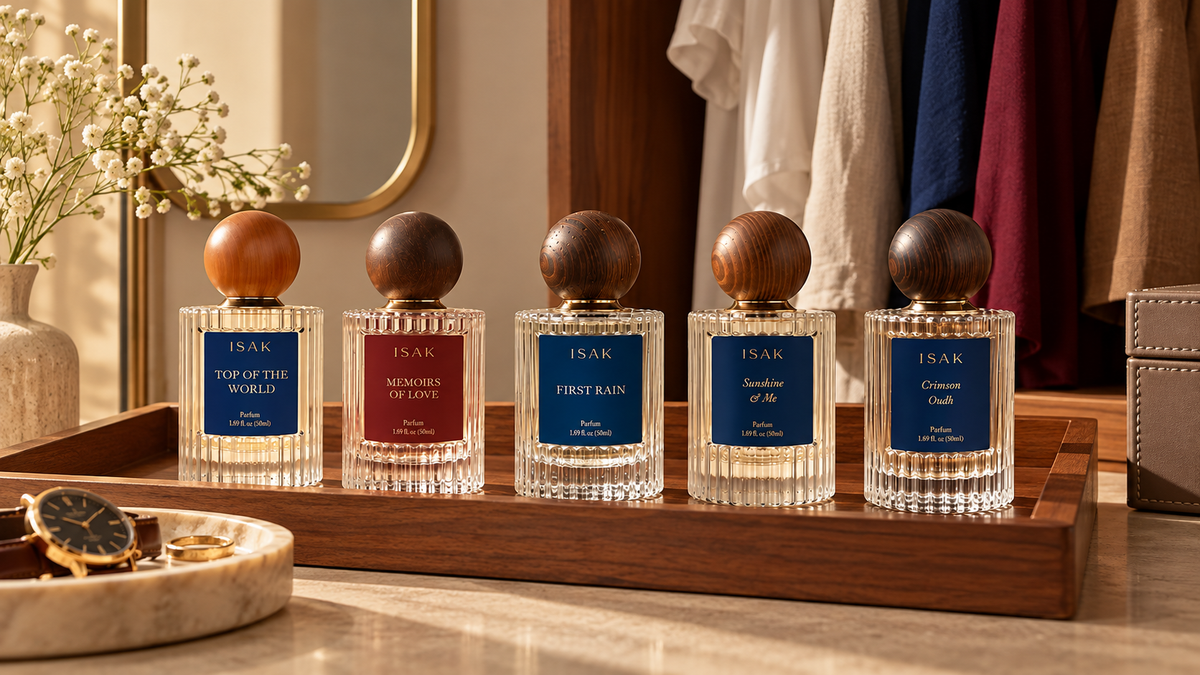
Natural ingredients bring genuine complexity. Because they are themselves mixtures of hundreds of compounds rather than single molecules, they introduce a depth and unpredictability that is difficult to replicate with individual synthetic molecules. Real oud, for example, is one of the most compositionally complex fragrance materials in the world, containing hundreds of individual aromatic compounds that interact differently at different stages of wear and different temperatures. The Crimson Oudh demonstrates this quality directly: real oud-based fragrances develop and shift on skin in a way that synthetic oud molecules, however well-engineered, tend to approximate rather than fully match.

Natural ingredients also vary between batches. The same rose variety grown in Bulgaria will smell noticeably different from one grown in India, and the same farm will produce different quality extracts in different years depending on rainfall, temperature, and harvest timing. This variability is part of the artisanal character of natural-forward fragrances, but it means that a fragrance built around natural materials will not always smell exactly the same from one production run to the next.
Synthetic ingredients offer consistency and performance that naturals often cannot match. Synthetic musks, for example, have a longevity on skin and fabric that most natural musk materials cannot replicate. They can be precision-engineered to project at specific temperatures, bind at specific rates, and last for defined durations. This is why even perfumes with a predominantly natural ingredient list typically include synthetic components in the base: the synthetic materials are doing essential structural work that naturals alone could not accomplish as reliably.
Synthetic ingredients also make possible fragrances that natural materials cannot produce at all. The petrichor captured in the First Rain perfume uses traditional Deg and Bhapka hydro-distillation of dry mitti to extract the natural petrichor character from the earth itself. That process produces a genuinely natural extract of the geosmin compound responsible for the rain-on-soil scent. The result is a fragrance that smells authentically of the first monsoon rain in a way that cannot be approximated by assembling synthetic approximations of each component individually, which is a practical example of why natural distillation retains its value in contemporary perfumery even as synthetic options improve.
The Truth About Skin Safety, Allergens, and IFRA Compliance
The most dangerous misconception in the natural versus synthetic debate is that natural equals safe and synthetic equals harmful. This is not how skin reactivity works, and it leads some consumers toward fragrance choices that actually increase their risk of allergic response.
Many of the most potent allergens in perfumery are natural materials. Cinnamaldehyde, the primary compound in cinnamon bark oil, is one of the most common causes of contact dermatitis in fragrance. Eugenol, found in rose absolute, clove, and several other natural botanicals, is a well-documented sensitiser. The concentration of these materials in a finished fragrance determines the risk, not whether they originated in a laboratory or a field.
Synthetic materials, by contrast, are often used specifically to reduce allergen exposure. When a natural extract contains a high concentration of a known sensitiser, perfumers can replace it with a synthetic version engineered to deliver the same scent character without the problematic compound. This produces a fragrance that smells similar, lasts as well or better, and is safer for sensitive skin.
IFRA, the International Fragrance Association, sets globally recognised safety standards for both natural and synthetic fragrance materials. IFRA-compliant perfumes have been tested and formulated to stay within established safe concentration limits for each ingredient, whether natural or synthetic. A fragrance that carries IFRA compliance is not a promise that it will suit every skin type, but it is a meaningful assurance that the formula has been evaluated against international safety criteria. The 20 percent concentrate EDPs in the ISAK range are formulated to this standard, which is relevant for anyone with fragrance sensitivity concerns.
The practical guidance is to evaluate fragrances by how your skin responds to them rather than by whether their ingredients are natural or synthetic. A patch test on the inner wrist, worn for 24 hours before committing to regular wear, is more reliable than any label claim.
How to Read a Fragrance Through the Natural vs Synthetic Lens
Most commercial and artisanal perfumes contain both natural and synthetic ingredients, typically in proportions that serve the specific requirements of each fragrance rather than any ideological position. The relevant question is not whether a perfume uses natural or synthetic materials but whether it uses them well and honestly.
A perfume that uses high-quality natural extracts alongside precision-engineered synthetic molecules can achieve things that neither category could do alone. Real cedarwood and musk base notes provide the organic warmth and complexity of natural woody materials. Synthetic molecules in the base structure extend that warmth across the full wear duration and ensure the scent behaves consistently on different skin types. The Forest Rain perfume, with its cedarwood and musk base layered over petrichor and floral top notes, illustrates this blend in practice: the natural woody and earthy character is present, and the longevity and consistency of the base comes from the structural work that well-chosen synthetic molecules make possible.
When evaluating a fragrance for purchase, three questions are more useful than asking whether it is natural or synthetic. First: how does it develop on your skin across the first two hours? Top notes fade quickly regardless of their origin; the heart and base are what you are actually committing to. Second: how does your skin respond to it after prolonged wear? Redness, itching, or unusual skin reaction is the relevant signal, and it can come from natural or synthetic materials equally. Third: is the formula transparent about what it contains and does it meet recognised safety standards? A brand that can answer those questions clearly is a more trustworthy choice than one that relies on marketing language around naturalness or purity without specifying what that means in practice.
Frequently Asked Questions
Are natural perfumes always better for sensitive skin?
No, and this is one of the most persistent misconceptions in fragrance. Many natural botanical extracts contain compounds that are among the most common causes of fragrance-related skin reactions, including cinnamon bark, eugenol, and several rose derivatives. Sensitive skin benefits more reliably from fragrance formulated within IFRA safety limits and tested for allergen concentration than from fragrance marketed as natural. If you have known fragrance sensitivity, patch testing before regular wear is the most useful precaution regardless of whether the ingredients are natural or synthetic.
Why do some synthetic fragrances last longer than natural ones?
Synthetic aromatic molecules can be engineered for specific longevity and diffusion characteristics that natural extracts cannot always match. Synthetic musks in particular are designed to bind to skin and fabric and release gradually over many hours, producing a longevity that most natural musk materials cannot replicate at safe concentrations. This is why even predominantly natural fragrances typically include synthetic materials in the base layer: those molecules are doing the structural work that keeps the scent present throughout the day.
What does IFRA compliant mean on a perfume label?
IFRA compliance means the fragrance has been formulated within the safety guidelines set by the International Fragrance Association, the global industry body that evaluates the safety of aromatic materials. IFRA sets maximum usage levels for hundreds of individual ingredients, both natural and synthetic, based on toxicological and dermatological research. A compliant formula has been checked against these limits, which is a meaningful safety assurance that applies regardless of whether the ingredients are plant-derived or lab-created. It does not guarantee that the fragrance will suit every individual skin type, but it confirms the formula has been evaluated against international safety criteria.
Is oud in perfume always real and natural?
Not always, and the distinction matters significantly for the scent experience. Real oud, or agarwood resinoid, is one of the most compositionally complex natural fragrance materials available, containing hundreds of individual aromatic compounds that develop and shift on skin in a way that single synthetic oud molecules cannot fully replicate. Synthetic oud molecules, often called agarwood or oud accord on ingredient lists, approximate the character of real oud at a much lower cost and with greater consistency but with less depth and development. The Crimson Oudh blends real oud with carefully selected synthetic oud notes, creating a rich, layered character and a distinctive shifting dry-down that captures the depth and complexity of oud.
Can a fragrance that uses synthetic ingredients still be considered artisanal or high quality?
Yes, without qualification. The artisanal quality of a fragrance is determined by the skill of the composition, the quality of the specific materials used, and the care of the manufacturing process, not by whether individual molecules originated in a plant or a laboratory. Many of the most respected perfume houses in the world use synthetic materials extensively, not as a cost-cutting measure but because certain synthetic molecules enable compositions that would be impossible or unsafe with naturals alone. The relevant marker of quality is whether the materials, natural and synthetic, have been chosen thoughtfully, combined with genuine compositional skill, and produced in a process that respects both the craft and the safety of the person wearing the fragrance.

Leave a comment
This site is protected by hCaptcha and the hCaptcha Privacy Policy and Terms of Service apply.