


The Best Perfumes for Indian Winter: A Complete Guide to What to Wear and Why
If you have ever noticed that a fragrance you abandoned in summer suddenly smells incredible in November, you are not imagining it. Temperature genuinely changes how perfume behaves, and Indian winter is without question the season that gets the most out of a well-chosen fragrance. The cooler air slows the rate at which aromatic molecules evaporate from your skin, which means scents develop more gradually, linger longer, and project in a more controlled way than they do in the heat of May. Fragrances that felt heavy, suffocating, or overpowering in summer suddenly become exactly right. If you have been wearing the same light, fresh scent year-round, winter is the moment to rethink what you are reaching for and why.
Why Winter Changes Everything About How Perfume Performs
It helps to understand the basic science before getting into specific recommendations, because once you understand why temperature matters, choosing the right winter fragrance becomes intuitive.
Fragrance molecules evaporate from skin at a rate determined by temperature. In hot weather, that evaporation happens quickly, which is why perfumes project strongly in summer but also fade faster. In cooler weather, evaporation slows down. This produces two outcomes that work in your favour during winter: the scent lasts significantly longer on skin, and it develops more gradually through its note pyramid rather than hitting you all at once and then disappearing.
This slower development is what makes complex, layered fragrances genuinely shine in winter. A woody oud composition that would feel heavy and cloying in humid August heat will unfold beautifully in December, moving through its top, heart, and base notes at a pace that lets you actually experience each stage. The warm, resinous character of its base notes, the ones that create the most impression, has time to emerge properly rather than being rushed through by heat.
There is also a sensory dimension worth mentioning. Cold air heightens the contrast between the cool environment and the warmth of a spiced or woody fragrance sitting close to your skin. You notice it more, and so do the people around you. In summer, warmth is everywhere. In winter, a warm scent becomes something people actually stop to appreciate.
The Scent Families That Belong in Your Winter Wardrobe
Not every fragrance is built for winter, and knowing which families thrive in the cold makes shopping much more directed.
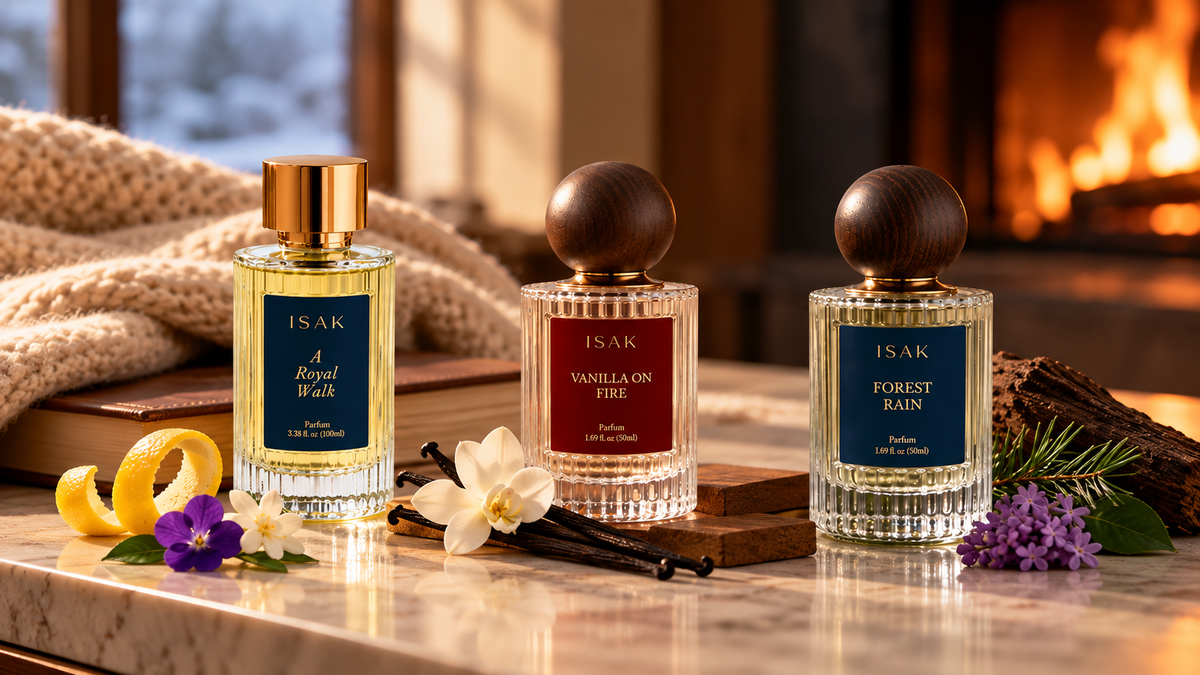
Woody fragrances are the obvious starting point. Cedarwood, sandalwood, vetiver, and patchouli all perform at their best when the temperature drops. These base-note materials have a warmth and depth that complements cold weather rather than competing with it. Forest Rain is a natural winter choice for exactly this reason. The cedarwood and musk base gives it a grounded, warm presence that builds slowly across the day, while the petrichor and lemon opening means it never feels heavy or stale. It is an all-day winter fragrance that works as comfortably in the office as it does on a cool evening out.
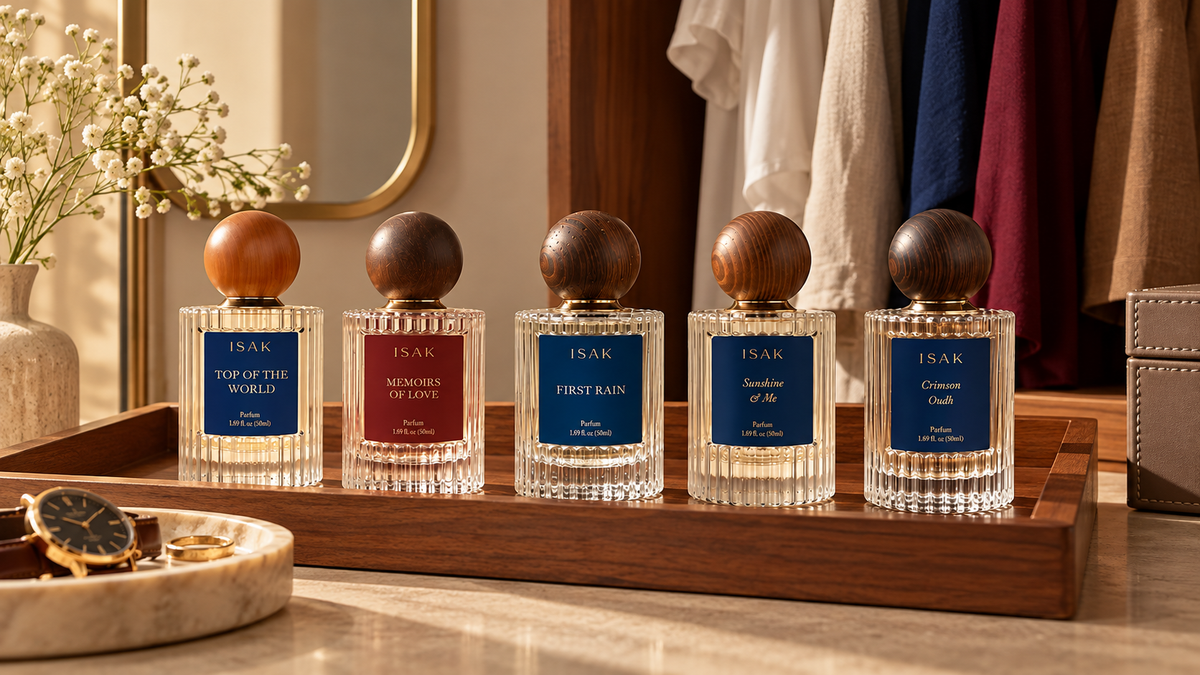
Oriental and oud-based fragrances are where Indian winter really comes into its own. These are the richest and most complex compositions in any fragrance range, and they are also the ones that most Indians grew up associating with winter, festivals, weddings, and occasions where making an impression matters. A Royal Walk, built around oud, sandalwood, and oakmoss, is the kind of fragrance that rewards a slow winter evening. It has the depth and heritage character of traditional Indian perfumery while wearing in a way that feels considered rather than old-fashioned. Crimson Oudh is a more accessible entry point into the oud family, with the characteristic warmth of the material without the full complexity that might feel like too much for everyday winter wear.
Warm florals also deserve a place in a winter collection, and they are often overlooked in favour of woodier options. Rain Kissed Roses is a good example of a floral that performs well in winter because the rose here is not a light, airy summer bloom; it is a fuller, richer interpretation that sits more comfortably in cooler temperatures. Lavender Rain similarly works across seasons but takes on a warmer quality in winter because its lavender heart develops more slowly and settles into something that feels calm and enveloping rather than simply fresh.
Gourmand and vanilla-forward fragrances are genuinely winter scents in a way they simply are not in other seasons. Vanilla on Fire is the clearest example of this in the range. It is a warm, bold fragrance built for situations where you want to be noticed and remembered. In summer, that warmth can feel like too much. In winter, worn with a good jacket in the evening, it makes complete sense. This is the kind of scent people comment on, and winter is the context where those comments are most likely to be well-received.
How Indian Winter Differs Across Cities and Why It Matters
One important thing to understand about perfume choices for Indian winter is that winter itself varies dramatically depending on where you live, and that variation changes what you should be wearing.
In Delhi and most of north India, December and January are genuinely cold. Temperatures drop to single digits at night and stay in the low teens through the day. This is proper coat weather, and it means the heaviest, most complex fragrances in your collection can be worn without reservation. Oud-heavy compositions, spiced orientals, and rich woody fragrances all have room to breathe in this environment without projecting too aggressively.
In Mumbai and coastal cities, winter means something quite different. Temperatures rarely go below 18 to 20 degrees Celsius even on the coldest nights, and the humidity is still meaningfully present. In this context, the very heaviest oriental fragrances can still feel like too much, and a middle ground makes more sense. Warm woody fragrances and light orientals work well here. Forest Rain, with its balanced structure of fresh top notes and woody base, suits Mumbai's mild winter better than a full oud-dominant fragrance would.
In Bengaluru, the pleasant cool temperatures that the city enjoys for much of the year make it one of the best environments for fragrance all year round. Most winter-appropriate scents will perform well here without the heavy projection concerns that come with genuinely cold northern winters.
The point is to calibrate your choice to your actual climate rather than to the idea of winter. The goal is a fragrance that performs well in your real daily temperature, not the generic concept of a cold season.
A Winter Scent Guide by Occasion
Beyond the general principle of choosing warmer and more complex fragrances in winter, it helps to match specific scents to the occasions that define the Indian winter calendar.
For the office in winter, the shift from summer does not have to be dramatic. You are still in an enclosed environment with other people, so the considerate choice is a fragrance with presence but not projection. Forest Rain remains one of the most reliable office-appropriate winter scents in the range because its dry-down is warm and grounded without radiating aggressively. Something like Memoirs of Love, with its gardenia, tangerine, and vetiver composition, also works beautifully for professional winter wear because the vetiver base gives it a woody seriousness while the floral heart keeps it from feeling heavy.
For evenings and social occasions, winter gives you real freedom. December and January in India are full of events, dinners, reunions, and celebrations, and this is the moment to wear the fragrances that feel too intense for everyday contexts. Above & Beyond, with its blend of bergamot, lavender, patchouli, amber, and sandalwood, is made for formal evenings, weddings, and black tie events. Its warm, sophisticated character adds a polished finishing touch when you want your fragrance to complement the occasion without overpowering it. Apply it to warm pulse points before heading out to let the scent develop throughout the evening.
For weddings and formal events, which reach their peak frequency in Indian winter, going richer is the right call. A Royal Walk is specifically suited to this context. It carries the heritage and depth of the Royal Awadh tradition in a composition that projects with the kind of authority that formal occasions call for. The oud, sandalwood, and oakmoss combination is a reference to the finest tradition of Indian occasion perfumery, worn in a contemporary way.
For casual weekend winter days, the choice can be warmer than your weekday default without going all the way to an evening fragrance. 5th and Always works well here: warm, layered, and comfortable for a leisurely morning or a relaxed afternoon, without the formality or intensity of a wedding-ready fragrance.
How to Apply Perfume in Winter for the Best Results
Winter changes not just what you should wear but how you should apply it. A few adjustments to your routine make a meaningful difference to how your fragrance performs across the day.
The most important thing to understand is that cold weather dries skin out, and dry skin holds fragrance for less time. This gets worse as the season progresses and you spend more time in dry, artificially heated indoor environments. The single most effective winter habit is applying an unscented moisturiser to your pulse points a few minutes before your perfume. The oil layer gives fragrance molecules something to bind to rather than evaporating directly off dry skin. The improvement in longevity from this one step alone can be several hours.
In winter, the classic pulse points remain the right places to apply: the inner wrists, the base of the throat, and the inner elbows. The difference from summer is that you might also consider the chest and the nape of the neck, areas that are often covered by clothing in winter. Fragrance applied to the chest and trapped beneath a warm layer of fabric creates an intimate cloud that develops slowly and stays present throughout the day without projecting outward into the room.
One thing to avoid in winter is over-applying to compensate for what you perceive as reduced projection in cold air. The projection of most fragrances actually stays consistent in winter; what changes is the rate of development, not the eventual intensity. Two to three sprays on moisturised skin in winter is almost always sufficient. Applying more results in an overpowering opening that gives the wrong impression in the first hour, even if it settles into something pleasant later.
For those who layer attars with EDPs, winter is the season where layering pays off most. A small amount of a complementary attar applied to the wrists before the EDP spray adds depth and longevity to the overall composition in a way that is particularly suited to the slower, richer development that cool weather encourages. Browse the full ISAK perfume collection to find combinations that share a base note character, such as a cedarwood attar beneath Forest Rain, or an oud attar beneath Crimson Oudh, which gives the finished scent a depth and longevity that either product alone could not achieve.
Frequently Asked Questions
Why does perfume smell different in winter compared to summer?
Temperature controls the rate at which fragrance molecules evaporate from skin. In summer, heat accelerates evaporation, producing a strong initial projection that fades faster. In winter, cooler temperatures slow this process, causing the scent to develop more gradually through its note layers and last significantly longer. This is why complex, warm fragrances that feel too intense in summer come into their own in winter: they have time to develop properly rather than burning through their stages too quickly.
Which perfume notes are best for Indian winter?
Woody notes like cedarwood, sandalwood, and vetiver, oriental notes like oud, amber, and resins, spiced notes like cinnamon, cardamom, and leather, and warm gourmand notes like vanilla all perform at their best in cooler temperatures. These base-heavy compositions develop slowly and last long, which is exactly what winter conditions allow them to do. Fresh citrus and aquatic top notes still work but will fade faster in cold air, so fragrances that rely on those notes without a strong base may feel short-lived.
Can I wear oud perfumes to the office in winter?
You can, but restraint matters. Oud can be a powerful projection note and office environments are enclosed, which amplifies any fragrance. If you want to wear oud to work in winter, two sprays applied to the wrists and throat rather than the chest is the right approach. A lighter oud composition like A Royal Walk is better suited to professional daytime wear than a full royal oud fragrance, which is better saved for evening occasions. Checking in with how you are smelling an hour after application is always a good habit before committing to the day.
How many sprays should I apply in winter?
Two to four sprays on moisturised skin is the right range for most EDPs in winter. The common impulse to apply more in cooler weather because projection feels reduced is almost always a mistake. Winter does not reduce projection; it slows the development of the scent, which means a fragrance that feels subtle in the first fifteen minutes will build into something more present over the following hour. Give the fragrance time to develop before deciding you need more.
Is winter the best season to try new fragrances?
It is certainly a forgiving one. Cool temperatures give fragrances time to develop through their full note pyramid, which means you experience a more complete picture of what a perfume actually is across its lifecycle. In summer, the top notes dominate and fade quickly, which can make a fragrance feel like a different product from the one you tried in winter. Trying a new fragrance in winter, wearing it through a full day including an evening, gives you the most complete reading of how it will perform and whether it suits you.
Should I switch my perfume completely between seasons or just add winter options?
Adding rather than switching is the more practical approach, and it is also the foundation of a perfume wardrobe. Keep your existing everyday scents for the contexts where they still work and add one or two winter-specific options for evenings, occasions, and the colder days where a richer fragrance genuinely makes more sense. Most people find that having two to three winter-appropriate perfumes alongside their year-round everyday options covers every situation the season presents without the cost or complexity of a full seasonal overhaul.


Leave a comment
This site is protected by hCaptcha and the hCaptcha Privacy Policy and Terms of Service apply.