


How to Make Your Perfume Last Longer: A Complete Application Guide
Most complaints about a fragrance "not lasting" are not about the fragrance. They are about the fifteen seconds after it leaves the bottle. Application decides more of a scent's life than concentration ever will: where it lands, what it lands on, and what happens around it in the hours that follow.
Here is what six generations of ISAK Fragrances' work with attars and hydro-distilled naturals have taught us about making a fragrance stay.
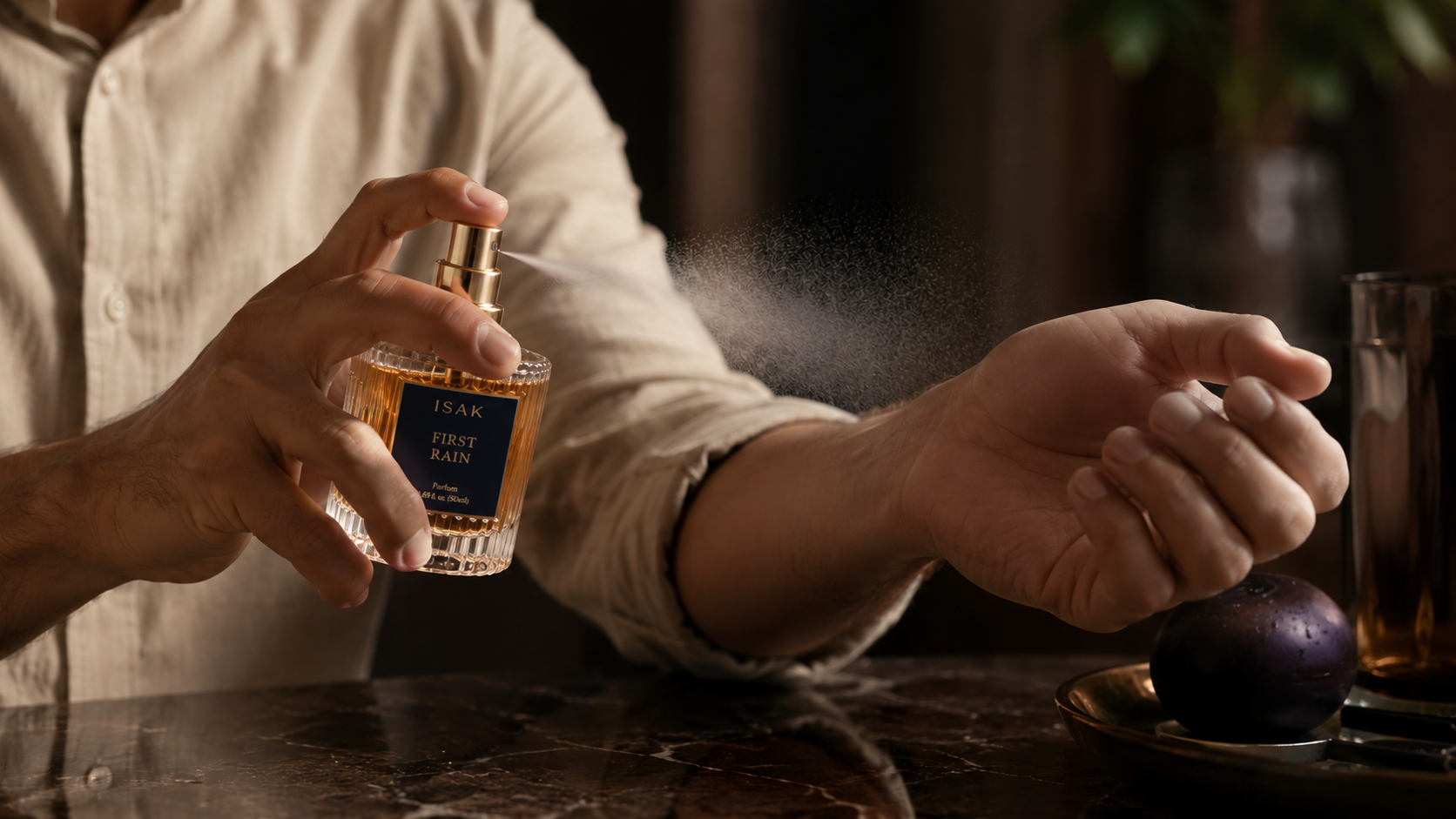
Start with the pulse points, not the air

Fragrance survives on warmth. Wrists, the base of the throat, behind the ears, the inside of the elbows: these run warmer than the rest of the skin, and that warmth is what carries a scent outward through the day, in small rising currents, rather than letting it evaporate in one burst. Spraying into the air and walking through the mist looks elegant and does very little; the fragrance is spent before it ever touches you.
Two to three points is enough. Overapplying doesn't extend a scent's life; it just front-loads the opening notes and leaves less for the hours that matter.
Hydrated skin holds a scent longer than dry skin

Dry skin has less to hold onto. An unscented, oil-based moisturiser on pulse points before application gives the fragrance something to sit in rather than sinking straight into skin and fading within the hour. This matters more with naturals, the way First Rain's petrichor accord is built, or the way our attars carry sandalwood and oud through a Deg & Bhapka distillation, because these compositions rely on real oils, not a heavy synthetic fixative doing the holding for them.
Let clothing carry what skin can't

Skin renews itself, sweats, and runs warm, all of which is part of why a fragrance seems to fade faster on skin than it actually does. Fabric doesn't do any of that. A light mist on clothing (a scarf, a shirt cuff, the inside of a jacket) holds a fragrance for considerably longer than skin alone, which is why a coat worn once with attar on it will still carry the scent days later.
Two cautions here, and they are not optional. Test on an inside seam first, especially with light or delicate fabrics; silk in particular can mark. And spray from a slight distance, never directly against the fabric at close range, so you're placing a mist, not a wet patch.
Layer, don't just reapply
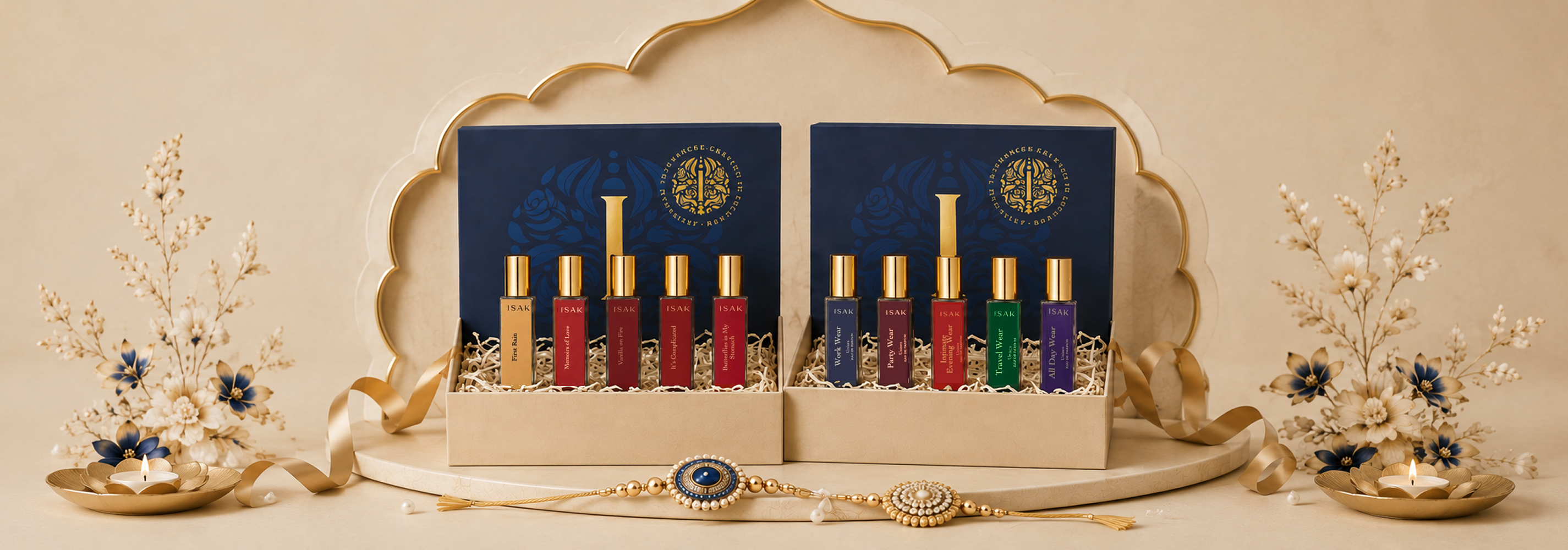
Reapplying the same fragrance through the day flattens it: you smell the same note over and over instead of the composition unfolding as it's meant to. Layering an attar under a perfume, or a lighter composition over an oil, gives a fragrance more to say by evening than it had at nine in the morning. This is easier to test than to explain, which is part of why the Discovery Pack exists, nine compositions in 3ml vials, built for exactly this kind of experimenting before you commit to a full bottle.
Store it away from what breaks it down
Heat, light and humidity are the three things working against a fragrance from the moment it's bottled. A bathroom shelf, a windowsill, a car: all of it accelerates the breakdown of the oils that give a composition its shape. Keep bottles upright, capped, out of direct sunlight, somewhere the temperature doesn't swing. Alcohol-free attars are more sensitive to this than perfumes, not less. There's no alcohol acting as a stabiliser, so the oils are more exposed to their environment, and deserve a cooler, darker place to sit.
The fragrance was never the only variable
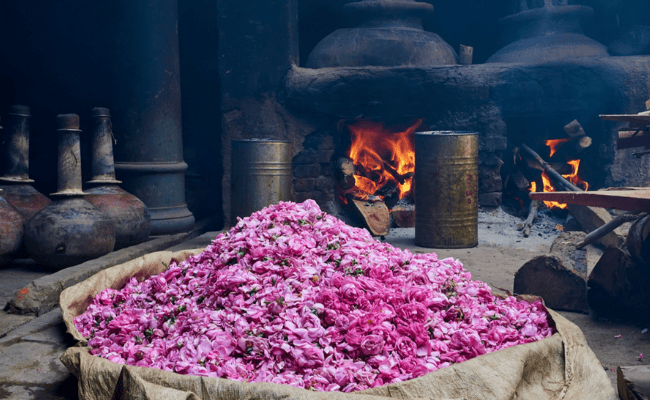
A composition distilled the traditional way, dry mitti carried through nearly a month of Deg & Bhapka hydro-distillation, in the case of First Rain, is not competing with a mass-produced formula on raw projection. It's not built to. What it offers instead is depth that rewards the right application: warmth, hydrated skin, fabric, patience.
Some of our own compositions are already built with that depth in mind. First Rain's petrichor accord and Above & Beyond's amber and sandalwood base both carry a slower, longer arc than a lighter fragrance would, so they tend to hold well through a full day once the steps above are followed. Get the application right, and what you're wearing lasts the way it was made to.
FAQ
How many sprays of perfume should I use?
Two to three, directly on pulse points and clothes, is enough for most eau de parfum strengths. More doesn't mean longer-lasting; it just means a stronger opening that fades at the same rate.
Does rubbing your wrists together after spraying ruin the fragrance?
Yes, to a small degree. Rubbing generates friction and heat that breaks down the top notes faster, so a fragrance opens differently, and often loses some of its opening character, than if you'd simply let it settle on its own.
Why does perfume not last as long on my skin as it does on a fabric or a paper strip?
Skin sweats, renews itself and runs warm, all of which speeds up how fast a fragrance evaporates. Fabric doesn't do any of that, which is why a scarf or jacket can carry a scent for days after the skin it touched has gone quiet.
Is attar or perfume longer-lasting?
An oil-based attar tends to sit closer to the skin and unfold more slowly, without the sharper opening burst of an alcohol-based perfume. Attar is definitively "longer-lasting"; as it holds on differently. Layering one under the other is often more effective than choosing between them.
Can I spray perfume directly onto my hair?
It's better to mist it onto a hairbrush or scarf first, then pass that through your hair. Hair holds fragrance for a long time, similar to fabric, but alcohol-based perfumes sprayed directly can dry out both hair and scalp over repeated use.
Does perfume expire, and does that affect how long it lasts on skin?
Yes. Heat, light and air exposure degrade a fragrance's oils over time, which is why a bottle that's sat open on a sunlit shelf for a year won't perform the way it did on day one. Kept capped, upright and out of direct light, most fragrances hold their character for a few years.
What's the best way to figure out which composition works with my skin before buying a full bottle?
Test in 3ml portions over a few days rather than judging from a single spray at a counter. Skin chemistry changes how a fragrance opens and settles, and that only shows over real wear. The Discovery Pack is built for exactly this.


Leave a comment
This site is protected by hCaptcha and the hCaptcha Privacy Policy and Terms of Service apply.