


Article: Oud in Summer vs Winter: When and How to Wear It Across Seasons
Oud in Summer vs Winter: When and How to Wear It Across Seasons
Oud is often labelled a winter-only ingredient in Indian fragrance conversations, but that framing does not hold up globally. Oud is the single most beloved fragrance ingredient in Dubai, the UAE, and across the Gulf, where temperatures regularly exceed 45 degrees Celsius and people wear it daily, generously, and without compromise. The question was never whether oud works in heat. It clearly does. The more useful question is how the composition around oud, your application quantity, and your choice between attar and EDP changes across seasons to get the best out of it.
Why Season Affects How Oud Wears, Not Whether It Can Be Worn
Oud is an ingredient, not a fragrance category. How it behaves on skin depends almost entirely on what it is paired with, how concentrated the formula is, and how much you apply. Heat accelerates the diffusion of aromatic molecules, which means an oud-based composition projects more intensely in summer than the same quantity would in December. Cold slows evaporation, which means oud develops more gradually in winter and stays present on skin longer.
Neither condition is a problem. They just call for different approaches.
High humidity, which India's coastal cities and all of India during monsoon experience, adds another variable. Humid air can cause heavy aromatic molecules to cluster rather than diffuse cleanly, which affects projection in ways that dry Gulf heat does not. Understanding this is the starting point for wearing oud well across the Indian calendar.
Wearing Oud in Summer
The adjustment in summer is quantity and composition, not the ingredient itself. One spray of an oud EDP or one drop of an oud attar is almost always the right starting point in peak Indian summer heat. Heat does the diffusion work that multiple application points would otherwise handle, so less product goes further than you expect. Apply to one or two pulse points rather than three or four, and apply in the morning before temperatures peak rather than mid-afternoon.
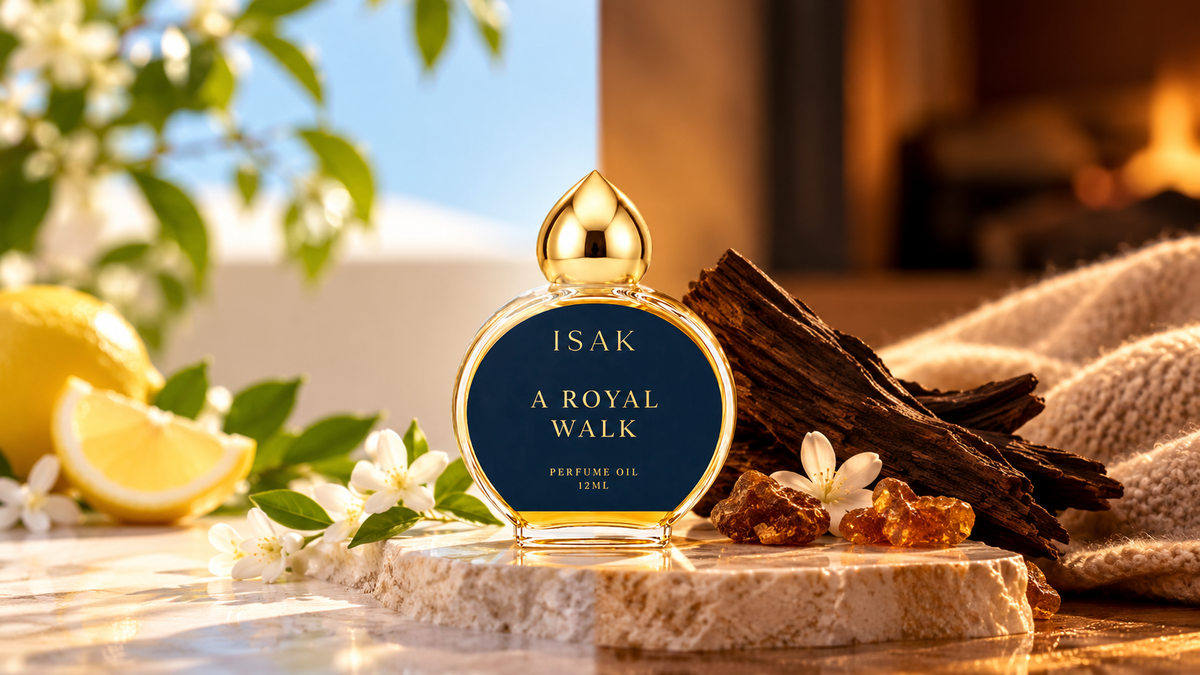
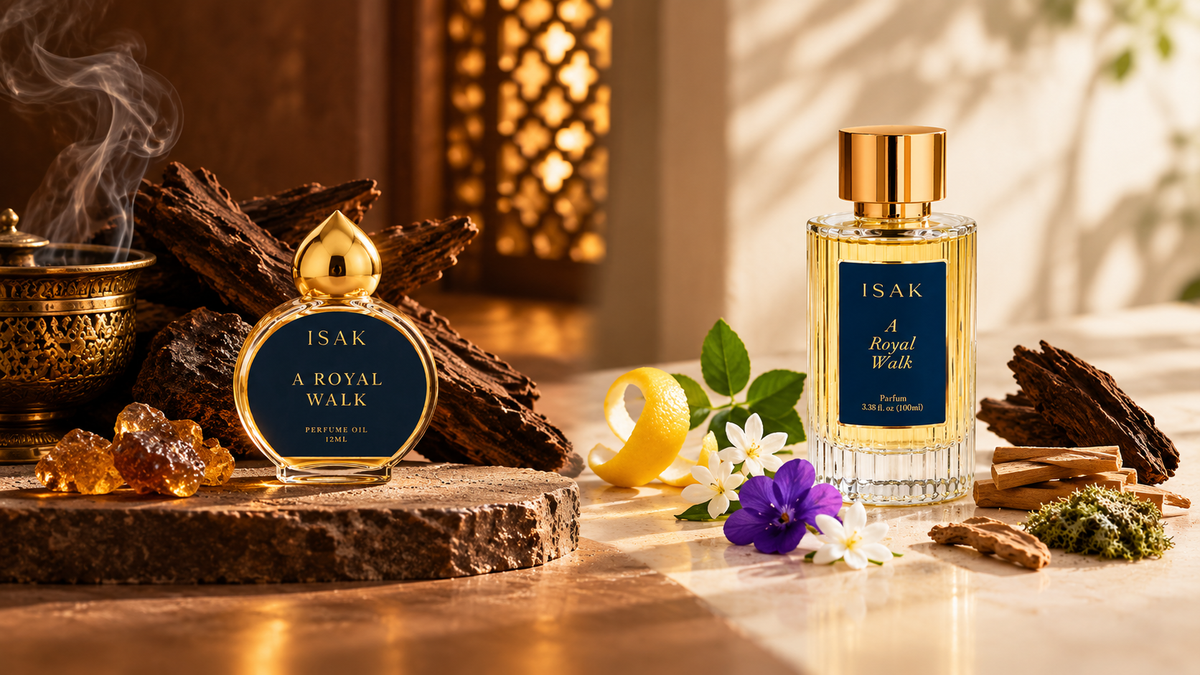
Composition matters more than season. Oud paired with fresh top notes like lemon, galbanum, or citrus handles summer well because the opening provides a moment of lightness before the oud base takes over. The A Royal Walk Attar opens with lemon and galbanum before moving through orris, jasmine, and violet into an oud, sandalwood, musk, and oakmoss base. That fresh green opening makes it genuinely well-suited to warm weather wear. One drop to a single pulse point in summer delivers the full progression without overwhelming.
The attar has a practical summer advantage over an EDP: 100% oil delivers no initial alcohol blast, which means projection stays controlled even as temperatures rise. For professional environments in summer, where you are sharing enclosed air-conditioned spaces with others, one drop of the attar to the inner wrists is the most considerate approach.
Wearing Oud in Winter
Winter is where oud as an ingredient reveals the most complexity. Cooler temperatures slow evaporation, which means the composition develops more gradually through its note layers rather than diffusing all at once. For an ingredient as compositionally rich as oud, this gradual development is where the real character lives. The earthy, woody, resinous depth that makes agarwood so distinctive has time to emerge properly in cool conditions rather than arriving immediately and fading quickly.
This is also when the EDP earns its place. The A Royal Walk Perfume at 20% aromatic concentrate in cool air produces exactly the kind of presence that formal Indian winter occasions call for: the lemon and galbanum opening arrives clean and clear, the orris and jasmine heart develops over 20 to 30 minutes, and the oud, sandalwood, musk, and oakmoss base settles into a deep dry-down that stays present for six to eight hours on moisturised skin. Two to three sprays across the chest, throat, and inner wrists is appropriate for an evening occasion in December or January.
Indian winter is also peak wedding and formal occasion season, which has historically been the primary context for high-quality oud wear on the subcontinent. For these occasions, the EDP's broader sillage is the right choice.
A Seasonal Wearing Guide
From March to June at peak summer, apply one drop of attar to one pulse point in the morning before the heat builds. From July to September during monsoon, humidity modulates the temperature somewhat but keep quantity minimal; the attar remains preferable over the EDP. From October to November during the festive season, this is the natural transition to EDP wear; two sprays on festive and formal occasions is appropriate as temperatures become more forgiving. From December to February in full winter, apply the EDP generously across two to three pulse points and let the fragrance develop over the course of the evening.
The practical case for owning both: the attar at INR 1,190 for 12ml covers summer wear, daily intimate use, and travel. The perfume at INR 3,600 for 100ml covers formal occasions, winter evenings, and any setting where a broader sillage is the right impression to make.
Frequently Asked Questions
Is oud too heavy for Indian summer?
No: oud is the most popular fragrance ingredient in Gulf countries where temperatures exceed 45 degrees daily. The adjustment in summer is quantity and composition, not the ingredient itself.
Does oud last longer in winter or summer?
Longer in winter: cooler temperatures slow evaporation, keeping aromatic molecules present on skin for more hours; summer heat amplifies initial projection but shortens overall longevity.
Should I use attar or EDP for summer oud wear?
Attar: 100% oil delivers no alcohol diffusion blast, making projection more controllable in high heat than an EDP spray.
Can I wear oud to work in Indian summer?
Yes, with one drop of attar to the inner wrists rather than a spray to the chest: intimate enough to not impose on colleagues in shared spaces.
How many sprays of oud EDP should I use in winter?
Two to three sprays across the chest, throat, and inner wrists for formal evening occasions; one to two for casual daily winter wear.
Does oud smell different in summer and winter?
The ingredient is the same but the experience differs: summer heat diffuses all aromatic compounds simultaneously for an intense opening that fades faster; winter cold allows the composition to develop sequentially, revealing complexity over hours rather than minutes.

Leave a comment
This site is protected by hCaptcha and the hCaptcha Privacy Policy and Terms of Service apply.